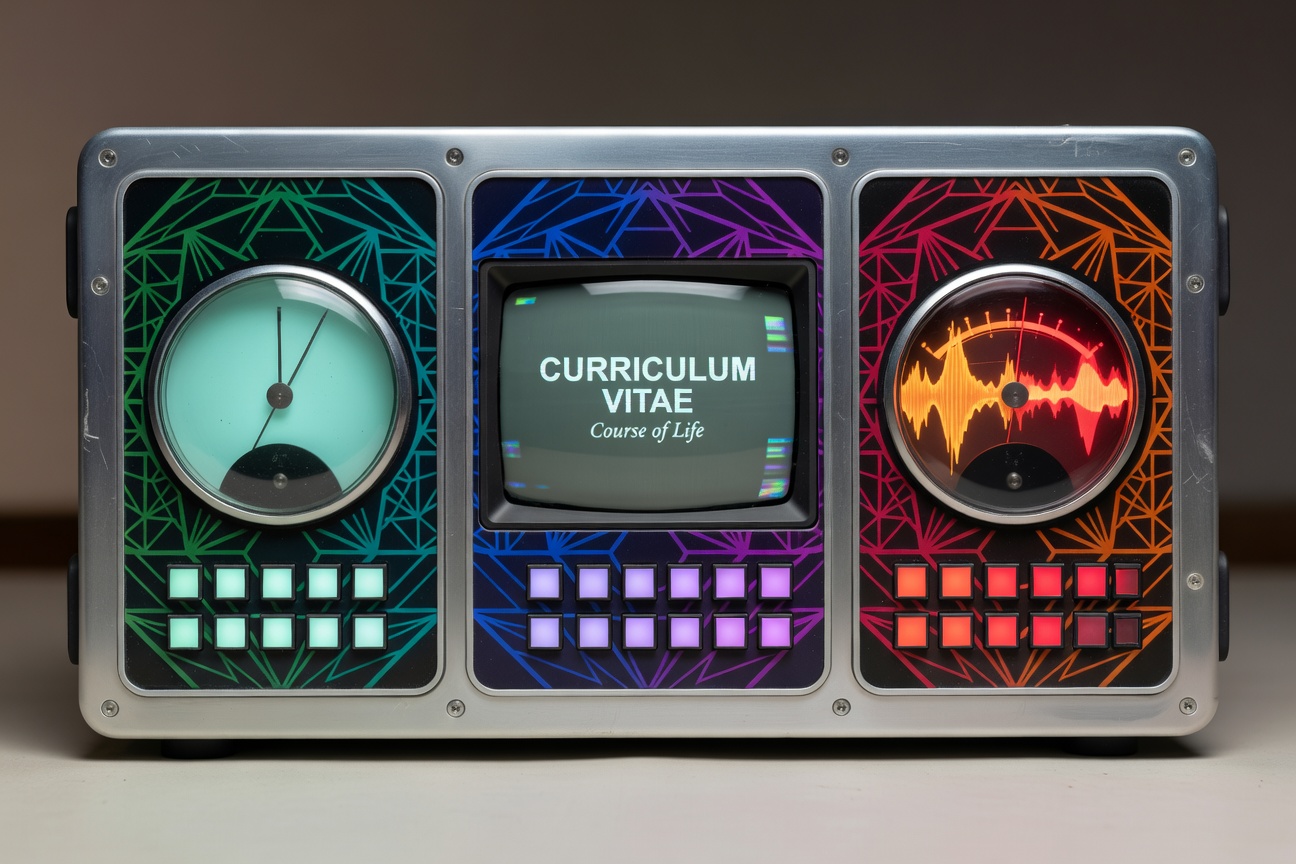
I left school before the end of Year 10. The teachers waved. The bell rang. The next curriculum started before the bus pulled away from the gate.
Nobody handed me a syllabus. Life had already mailed it and it took me 35 years to open the envelope.
The Curriculum Found Me
For a long while through out life I thought I had escaped education. I had not. I had simply transferred to the campus where everything is the lesson.
Sheep don't read the timetable. Generators don't wait for the bell. A blocked drain at midnight teaches plumbing whether or not you are ready, and a cranky patron in central London taught me about conflict mediation whether or not I had nominated that elective.
I was learning constantly. I just didn't have the notepad.
The Subject List
Subjects I did not know I was enrolled in:
- Pattern recognition (offered daily, no textbook).
- Improvisation under load (compulsory, no opt-out).
- Reading the room (taught by every room).
- Telling a story that gets a yes (advanced; pre-requisite: getting a no).
- Repairing what wasn't supposed to break.
- Repairing what was supposed to break, on schedule.
By the time I came back from the UK in the early 2000s and started weblocs.com.au, I had been studying full-time for almost a decade. The transcripts were in my head. The teachers were strangers. The marking was harsh and immediate.
The Credential Problem
Capability without paperwork has a peculiar economy. It works perfectly right up until someone needs to file you under something, and then it collapses into a tickbox on an HR form.
The form does not have a row for ten thousand hours of debugging your own ignorance.
For years I tried to translate. I would describe what I had done, and the form would ask where I had done it, and I would say "the world", and the form would offer a dropdown of approved suburbs.
The Print Room
Eventually you notice something quietly heretical.
The institutions have always been printing presses with logos on them.
The thing that gives a certificate weight is not the paper or the seal. It is the underlying claim being true.
If the claim is true, the printing is mostly logistics.
So last Tuesday, more or less, I designed and printed my own. Not the wallet-sized fraud kind. The accurate kind. I wrote down the title that fit the shape of what I had actually done. I chose the wording. I chose the layout. I issued it to myself with my own name on it, and the only seal I needed was the truth of the underlying claim.
The strange part is that the world started accepting it almost immediately. Because the world, when it isn't filling out forms, can read.
Field Intelligence
There is a name for this kind of qualification, and the name matters. Not "self-taught", which makes it sound like a hobby. Not "experienced", which is too coy. Try field intelligence: the kind of knowing that gets built when the conditions are unforgiving and the feedback loop is honest.
A farmer reads weather better than the forecast. A ninja, in the original sense, was just a farmer who learned to read a few other things as well. Both operate on data the curriculum doesn't formally cover.
Both also know exactly what they know.
A Note for the Newly Self-Issued
If you are sitting on capability you cannot translate, or expertise that no institution ever agreed to witness, here is the only advice I have:
- Write down what you actually know, in plain language.
- Write down how you came to know it.
- Sign it.
- Date it.
- Trust that the people who matter can read.
The qualification arrives, in the end, because you printed it. Not before. Not from anyone else. The waiting room was always empty.
Closing the Loop
The school I left before the end of Year 10 is still there. The new one I transferred to has no leaving date and no graduation, only an unbroken series of working Tuesdays.
The certificates print on demand, in the back.
The press is owned by whoever stops waiting first.